Explore real Korean expressions, nuance, context, and everyday usage beyond the textbook.
-

아쉽다 vs 섭섭하다: They Both Mean “Disappointed”—So What’s the Difference?
If you are looking for the difference between 아쉽다 vs 섭섭하다, English translations can make them look almost the same. Depending on the dictionary or situation, you may see words such as disappointed, sorry, regretful, or a shame. But Koreans do not choose between 아쉽다 and 섭섭하다 by translating an English feeling first. The more…
-

Itjana Meaning: What Does 있잖아 Mean in Korean Conversations?
What does 있잖아 mean in Korean? Learn how it introduces a topic, softens a personal message, and holds your turn in real conversations.
-

네 vs 넵 vs 넹: How Korean “Yes” Changes Your Text Tone
네, 넵, and 넹 all mean “yes,” but they can make a Korean message feel neutral, responsive, or playful. Learn the safest way to choose.
-
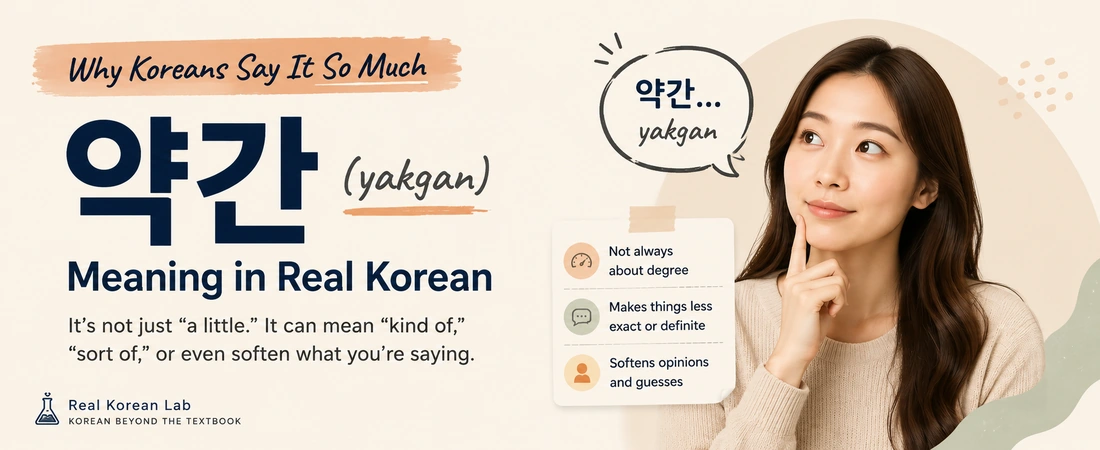
Yakgan (약간) Meaning: Why Koreans Say It So Much
약간 does not always mean “a little.” See how Koreans use it for degree, approximation, uncertainty, softened opinions, and natural conversational flow.
-
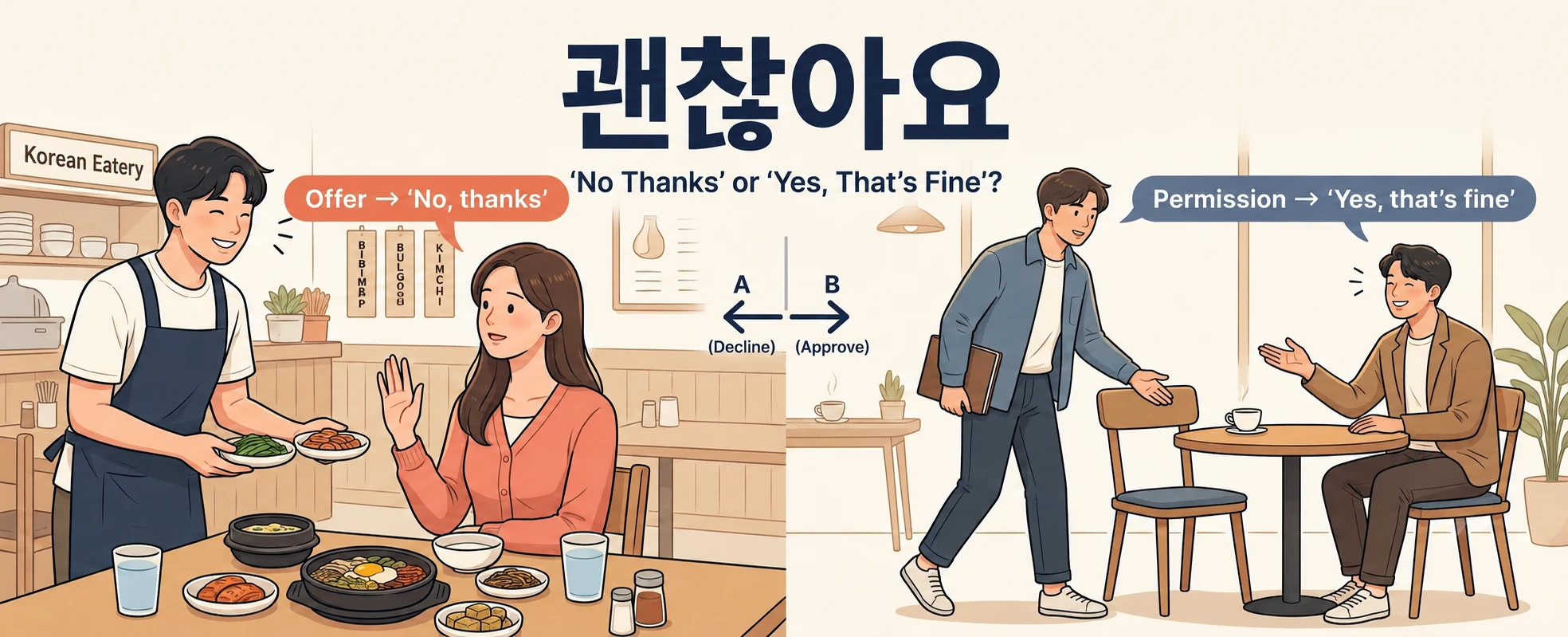
Gwaenchanayo Meaning: Why 괜찮아요 Can Mean Yes or No
If you have studied Korean for even a short time, you have probably learned 괜찮아요 (gwaenchanayo) as: Those translations are correct—but they are not enough to understand how Koreans actually use the expression. At a restaurant, you might hear this: 직원: 반찬 더 드릴까요?손님: 아, 괜찮아요. Staff: Would you like some more side dishes?Customer: No,…