Explore real Korean expressions, nuance, context, and everyday usage beyond the textbook.
-

What Does 썸 (Sseom) Really Mean? Are You Dating or Not?
썸 describes mutual romantic interest before two people officially start dating. Learn how it differs from 짝사랑, situationship, and 사귀다.
-
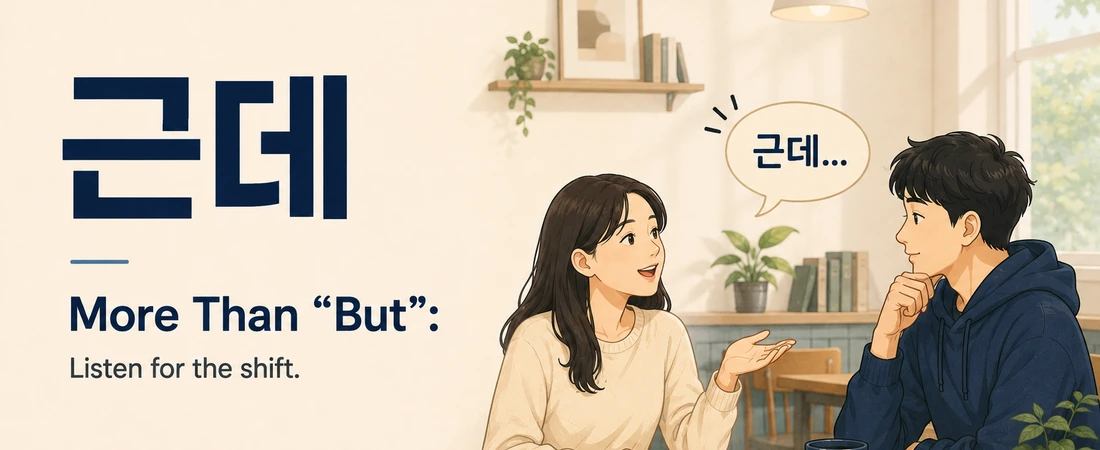
근데 Is More Than “But”: Why Koreans Start So Many Sentences With It
If you search geunde meaning, you will often find “but.” But real Korean conversations can get confusing very quickly. You might hear: 근데 너 오늘 뭐 해? There is no obvious contrast. Nobody just said something that needs a “but.” So what is 근데 doing there? Quick Answer The short answer is that 근데 can…
-

수고하세요 vs 수고하셨어요: What Koreans Are Actually Saying
수고하세요 and 수고하셨어요 are not just present-vs-past versions of “good job.” Learn how timing, effort, hierarchy, and workplace context change which expression fits.
-

좀 Doesn’t Just Mean “a Little”: Why Koreans Use It in Requests
좀 can mean “a little,” but in everyday Korean requests it often changes how direct the request feels. Learn how to tell literal quantity from request-softening use.
-
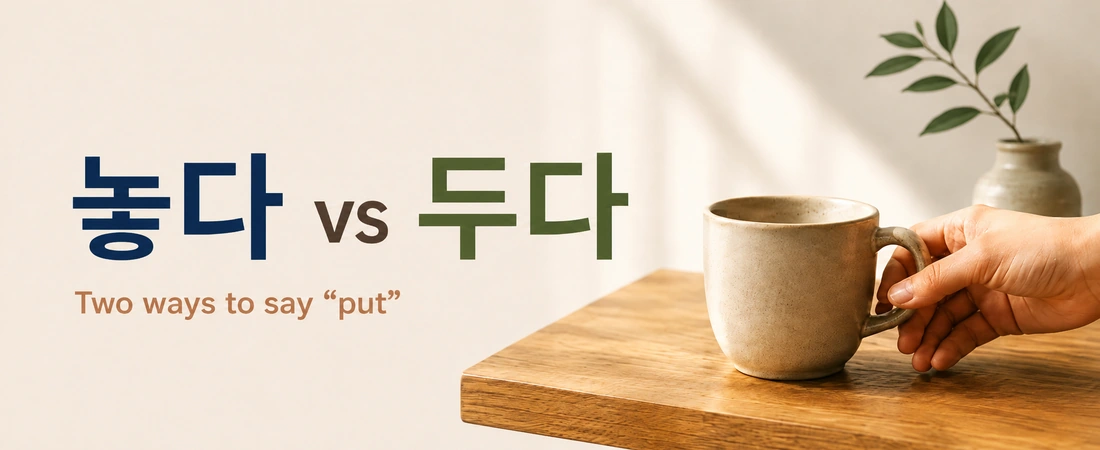
놓다 vs 두다: What’s the Difference in Korean?
놓다 and 두다 can both mean “put” in Korean. See when each feels more natural, where they overlap, and why -아/어 두다 often sounds right for preparing in advance.
-
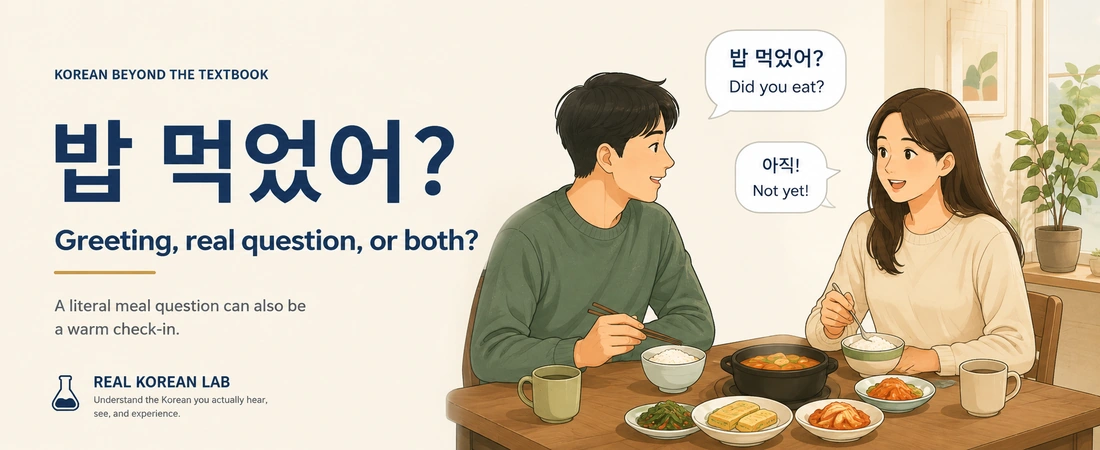
Why Do Koreans Ask 밥 먹었어? — Greeting, Real Question, or Both?
What does 밥 먹었어 mean? Learn why “Did you eat?” can be a real meal question, a caring check-in, or both—and how to answer naturally.